IICRC Commercial Carpet Maintenance Technician Class (CCMT)
CCT or CCMT — Which Carpet Cleaning Class Is Right for You?
The IICRC offers two carpet cleaning courses—the Carpet Cleaning Technician (CCT) and the Commercial Carpet Maintenance Technician (CCMT). Either class can be used toward earning your Master Textile Cleaner, Master Water Restorer, or Master Fire & Smoke Restorer designations.
But there are some differences.
If you mostly clean commercial carpet—or you’d like to clean more, the CCMT is a perfect fit. The CCT exam is going through revision now and the CCMT exam was updated in in the early part of 2025 and is now more practical and job-focused than ever. This class is built around the real-world challenges commercial cleaners face every day.
Here’s what makes CCMT different:
With residential cleaning is mainly restorative cleaning performed once a year. With commercial you’ll lean the difference between daily, interim, and restorative cleaning—not just one method.
Understand when hot water extraction is best and when low-moisture and encapsulation methods make more sense. Also, you’ll learn what types of equipment the carpet manufactures recommend and what type to avoid.
You’ll work with commercial carpet backings, styles, carpet tiles and installations you don’t typically see in homes.
Reduce problems like wicking, speed up dry times, and work more efficiently.
Cover additional safety topics and learn how to recognize product label pictograms.
Commercial carpet cleaning can be very profitable when done correctly, and CCMT shows you how to clean smarter, faster, and with fewer problems.
After this course, you’ll have the confidence to:
- Understand the carpet you’re cleaning
Learn what commercial carpets are made of and how to follow manufacturer guidelines so you can clean within their recommendations. - Choose the right tools and products—every time
Know which chemicals, equipment, and methods work best for different commercial environments to reduce wicking, rapid resoiling, and downtime. - Work safer and reduce risk
Identify common hazards in commercial floor maintenance and apply simple safety controls to protect yourself and the public. - Meet customer expectations and prevent complaints
Learn how to balance performance, appearance, and maintenance expectations in commercial settings. - Build effective maintenance programs
See real examples of proven commercial carpet maintenance plans to be more profitable and keep commercial carpet looking great – all year round.
If you clean commercial carpet—or want to—this course gives you the practical knowledge, confidence, and professional approach needed to deliver better results and stand out from the competition. When you understand the difference between commercial and residential carpet, you clean smarter, faster—and far more profitably.
This course has been approved for (14) IICRC CECs.
This same IICRC Commercial Carpet Maintenance Technician (CCMT) course is also available in Spanish.
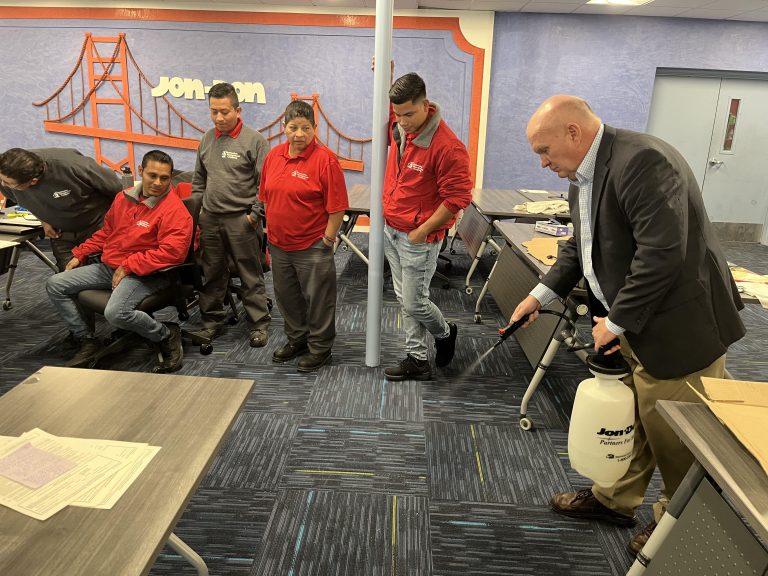
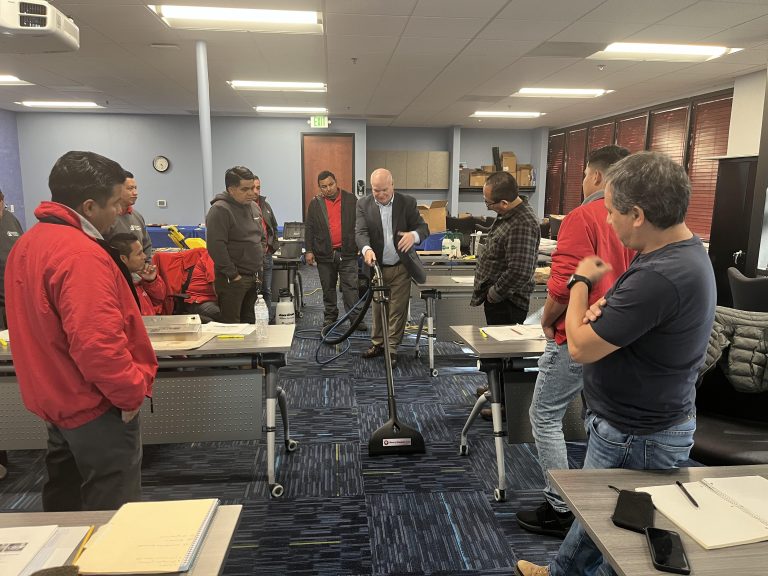
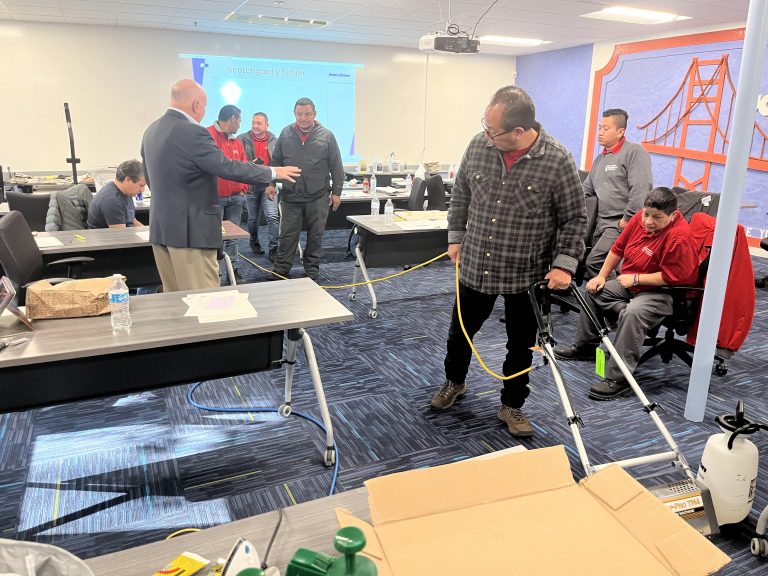
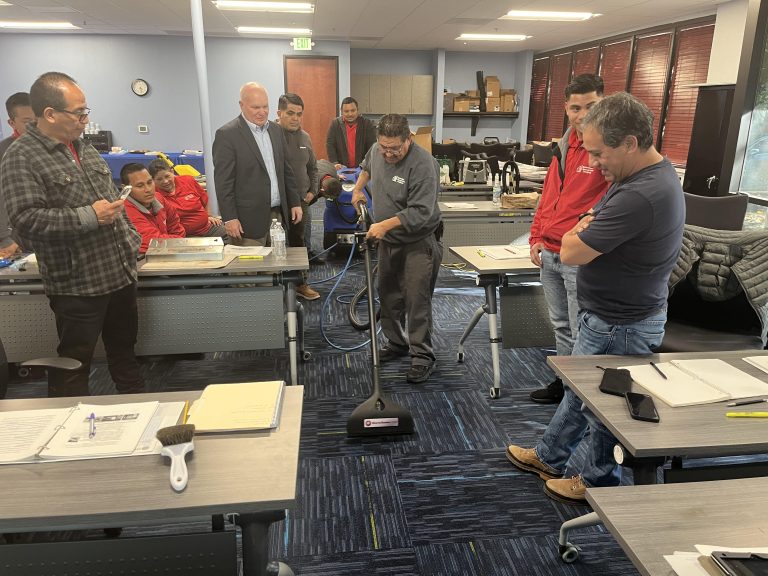
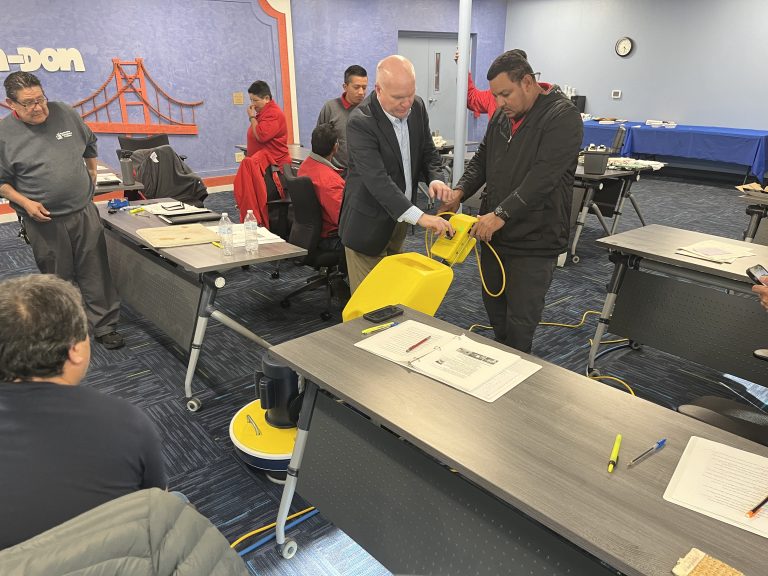
Commercial Carpet Maintenance Technician Class (CCMT 2 days)
CCMT Class Frequently Asked Questions
Will I learn how to improve production and profitability on commercial carpet cleaning jobs?
Yes. Production and profitability are important considerations in commercial carpet maintenance.
The course discusses how equipment selection, cleaning method, chemistry, setup, drying time, traffic patterns, and job scheduling can affect how efficiently a commercial project is completed.
The goal is to help students deliver the required level of cleaning while making good decisions about labor, equipment, time, and operating costs.
Will I learn how to build a commercial carpet maintenance program?
Yes. One of the important concepts in CCMT is understanding the difference between routine maintenance, interim cleaning, and restorative cleaning.
Students learn how factors such as traffic levels, soil load, carpet type, facility use, appearance expectations, and budget can affect cleaning frequency and method selection.
A well-designed maintenance program can help improve carpet appearance, extend useful life, reduce the need for aggressive restorative cleaning, and provide more predictable results for the customer.
Is the CCMT class helpful for experienced commercial carpet cleaners and business owners?
Yes. The course is valuable for both newer technicians and experienced cleaners who want to improve their understanding of commercial carpet maintenance.
For business owners and managers, the course can also help with estimating, selecting equipment and chemistry, developing maintenance programs, improving production, reducing callbacks, and increasing profitability on commercial accounts.
Does the CCMT course cover encapsulation cleaning?
Yes. Encapsulation is an important part of modern commercial carpet maintenance, and the course discusses how encapsulation chemistry works and where it can fit into an ongoing maintenance program.
Students learn when encapsulation may be used as an interim maintenance method, when it can complement hot water extraction, and when it may be appropriate as the primary cleaning method depending on the carpet, soil conditions, facility requirements, and manufacturer recommendations.
We also discuss the advantages and limitations of encapsulation, including drying time, production, appearance improvement, soil removal, and the importance of proper vacuuming.
What is the IICRC Commercial Carpet Maintenance Technician (CCMT) course?
The IICRC Commercial Carpet Maintenance Technician (CCMT) course teaches the principles and procedures used to professionally maintain commercial carpet.
The course covers commercial carpet construction, fibers, backing systems, installation methods, cleaning chemistry, maintenance planning, hot water extraction, encapsulation, other low-moisture methods, spotting, equipment selection, production, and problem-solving techniques technicians can use in the field.
Does completing the CCMT class automatically make me IICRC certified?
No. Completing the class prepares you for the IICRC CCMT examination, but certification is earned by successfully passing the IICRC exam and meeting IICRC certification requirements.
Students receive a Certificate of Completion after completing the class.